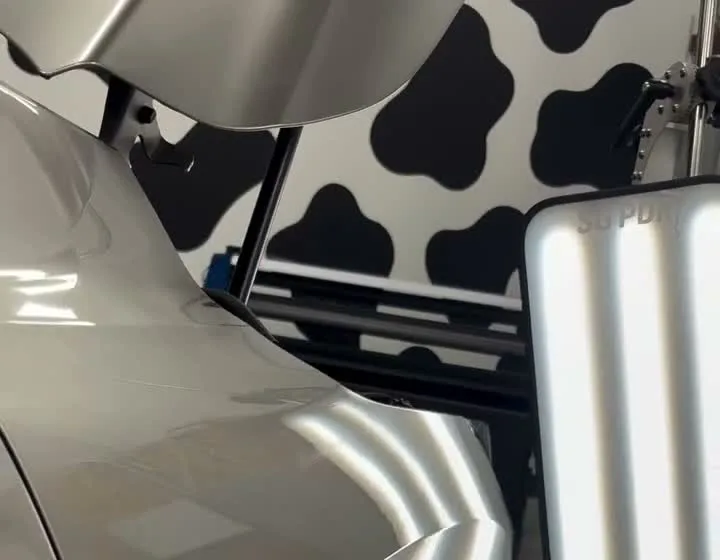
Do not judge the damage from one quick glance.
Hail dents can disappear in flat light and become obvious under reflection lighting. Check the roof, hood, trunk or hatch, upper doors, fenders, and trim from more than one angle. Photograph the whole vehicle before close-ups.
A practical hail-damage checklist
- Move the vehicle to a safe, dry place if glass or weather seals were damaged
- Photograph every side, the roof, the hood, and the vehicle identification details
- Review your policy and contact your insurer if you plan to make a claim
- Ask how inspections, estimates, deductibles, supplements, and repair-shop choice work under your policy
- Have the damage mapped under proper lighting before repairs begin
- Keep claim, estimate, photo, and repair records together
Where paintless dent repair may fit
PDR can be a strong option when the paint remains intact and the hail dents can be reached and reshaped safely. Severe stretching, broken paint, damaged trim, cracked glass, or collision-level damage may require other repair methods as part of the plan.
Insurance and hail repair questions
Should I file an insurance claim before getting an inspection?
Policy terms and claim procedures vary. You can document the vehicle and ask Sean for a damage inspection while also contacting your insurer for instructions specific to your coverage.
Can photos show every hail dent?
Usually not. Photos are useful for the first conversation, but controlled lighting and an in-person panel inspection may reveal additional damage.
Does SG PDR decide what my policy covers?
No. Coverage, deductibles, payment, and claim decisions belong to you and your insurer. Sean can explain the visible damage and the proposed repair method.